Heat Conduction Analysis Examples Using a Realistic Model
Analysis Models
For heat conduction analysis, a spent nuclear fuel transport cask is used as a realistic model. Three verification examples with different mesh resolutions are defined for this realistic model. These examples are listed in Table 9.5.1. The model geometries are also shown in Figures 9.5.1 through 9.5.4.
Table 9.5.1 Verification examples using a realistic model for heat conduction analysis
| Case Name | Element Type | Verification Model | Number of Nodes | Degrees of Freedom |
|---|---|---|---|---|
| EX21A | 361 | Spent nuclear fuel transport cask | 88,938 | 79,920 |
| EX21B | 361 | 309,941 | 289,800 | |
| EX21C | 361 | 1,205,765 | 1,159,200 |
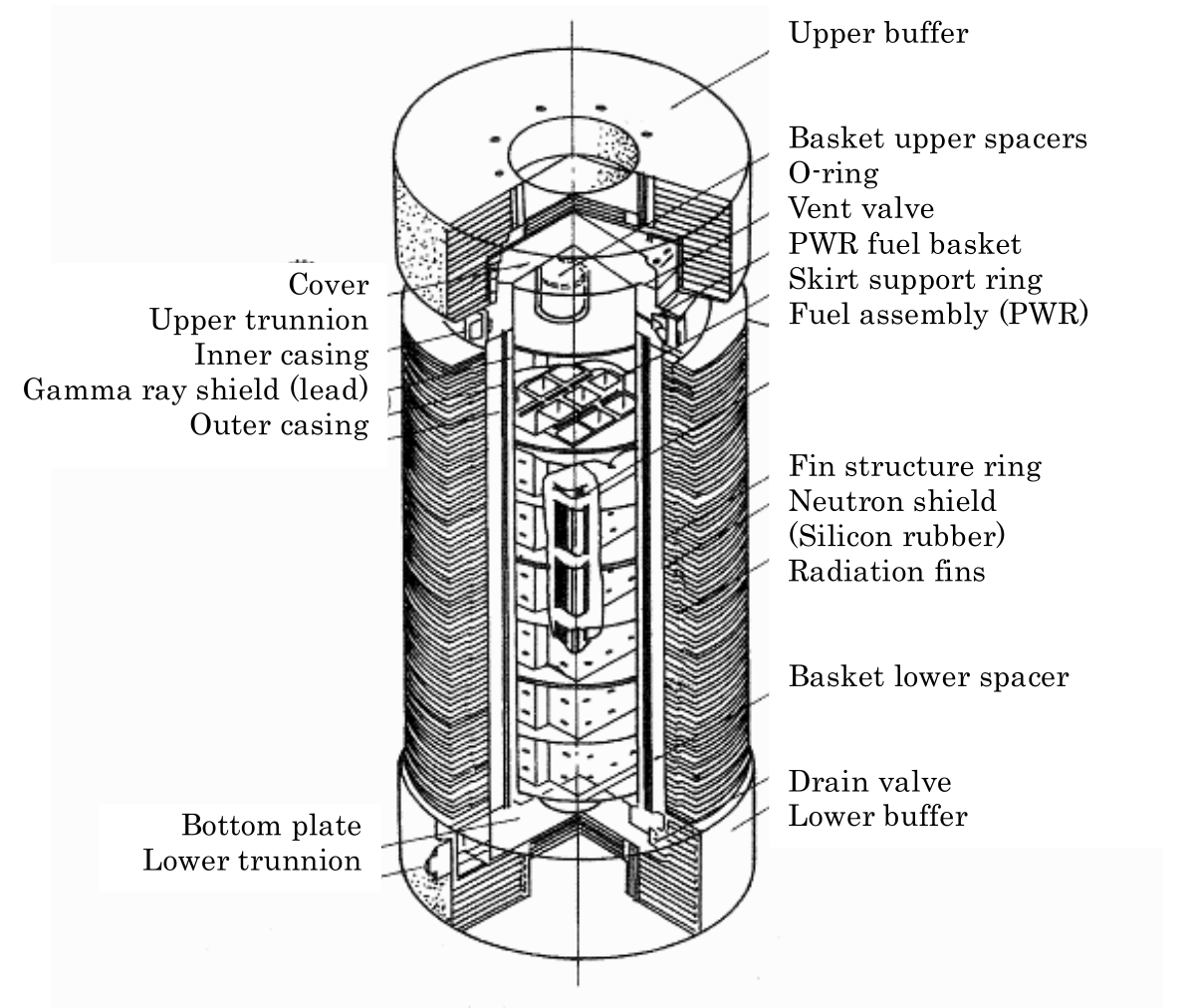
Figure 9.5.1 Spent nuclear fuel transport cask
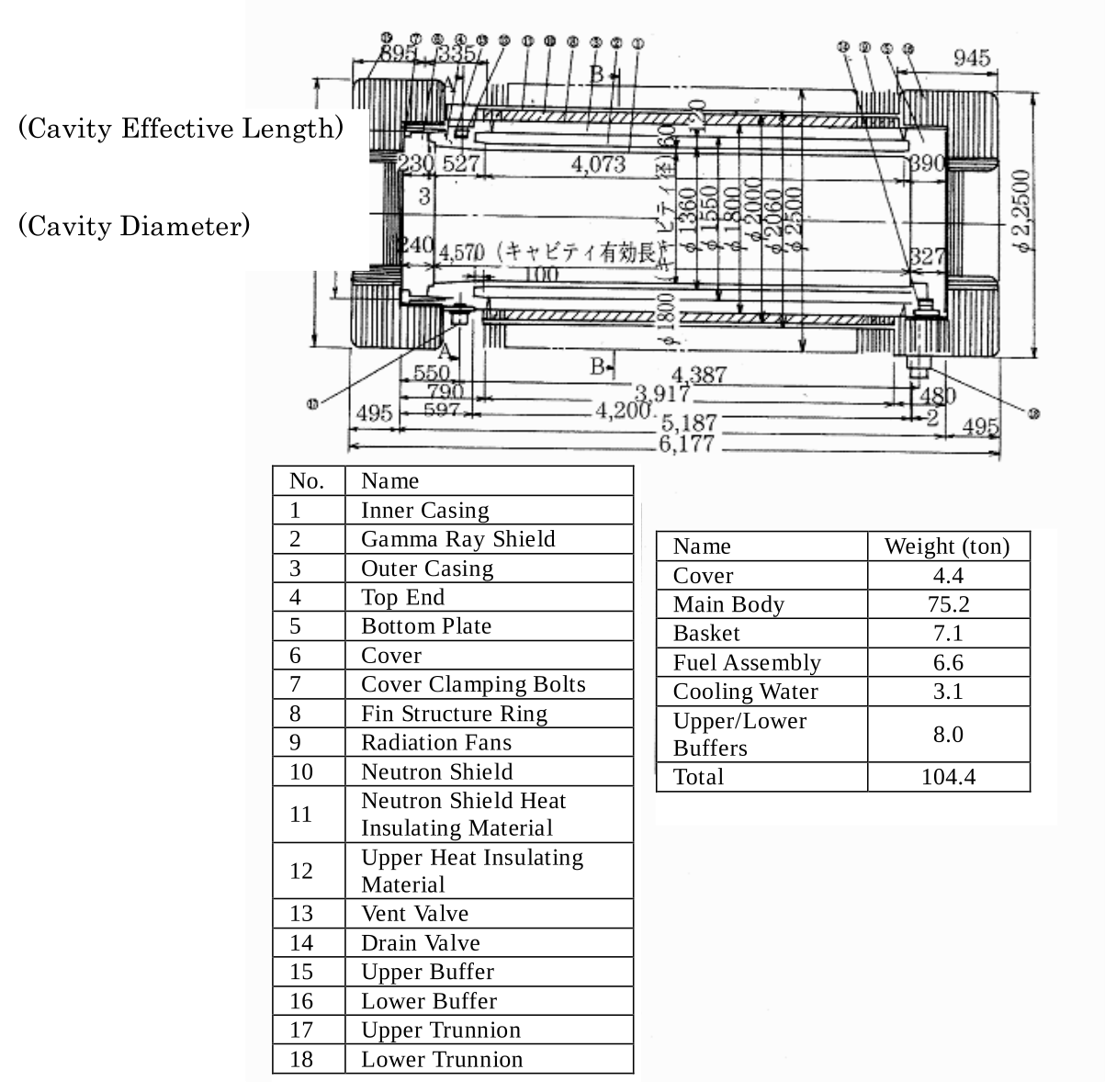
Figure 9.5.2 Dimensions of the spent nuclear fuel transport cask
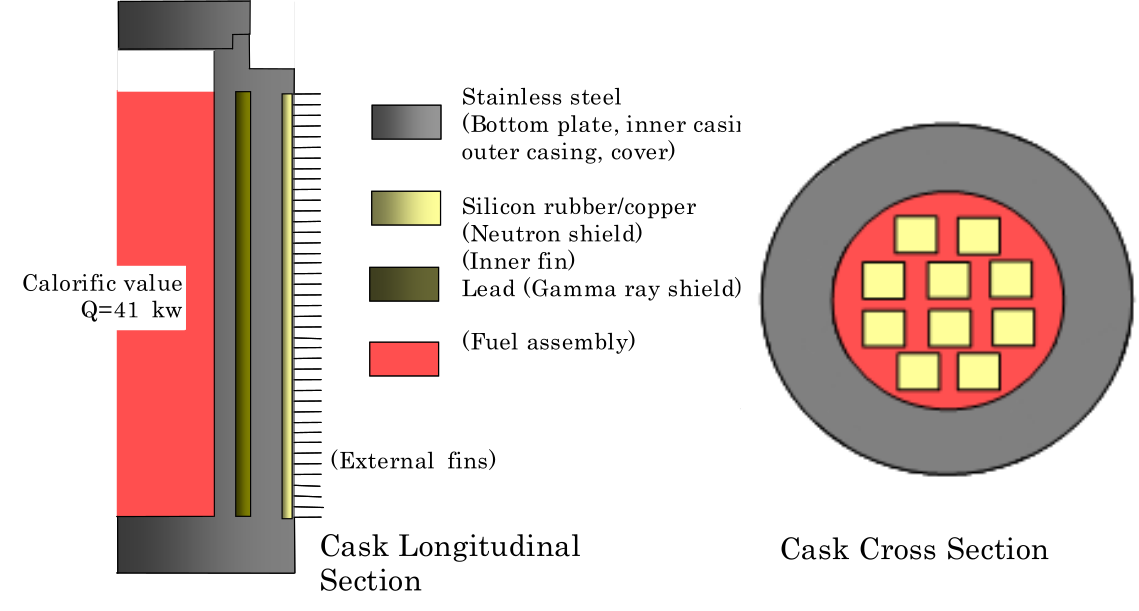
Figure 9.5.3 Model schematic
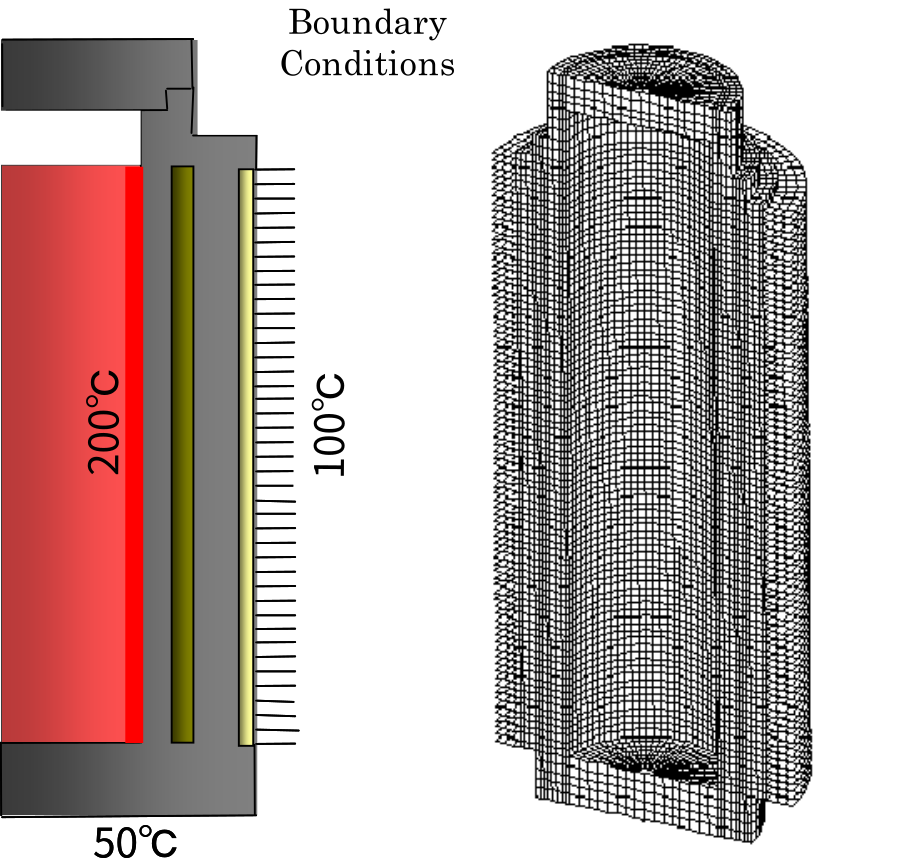
Figure 9.5.4 Model boundary conditions and mesh (EX21A)
Analysis Results
Examples of the analysis results are shown in Figures 9.5.5 through 9.5.7.
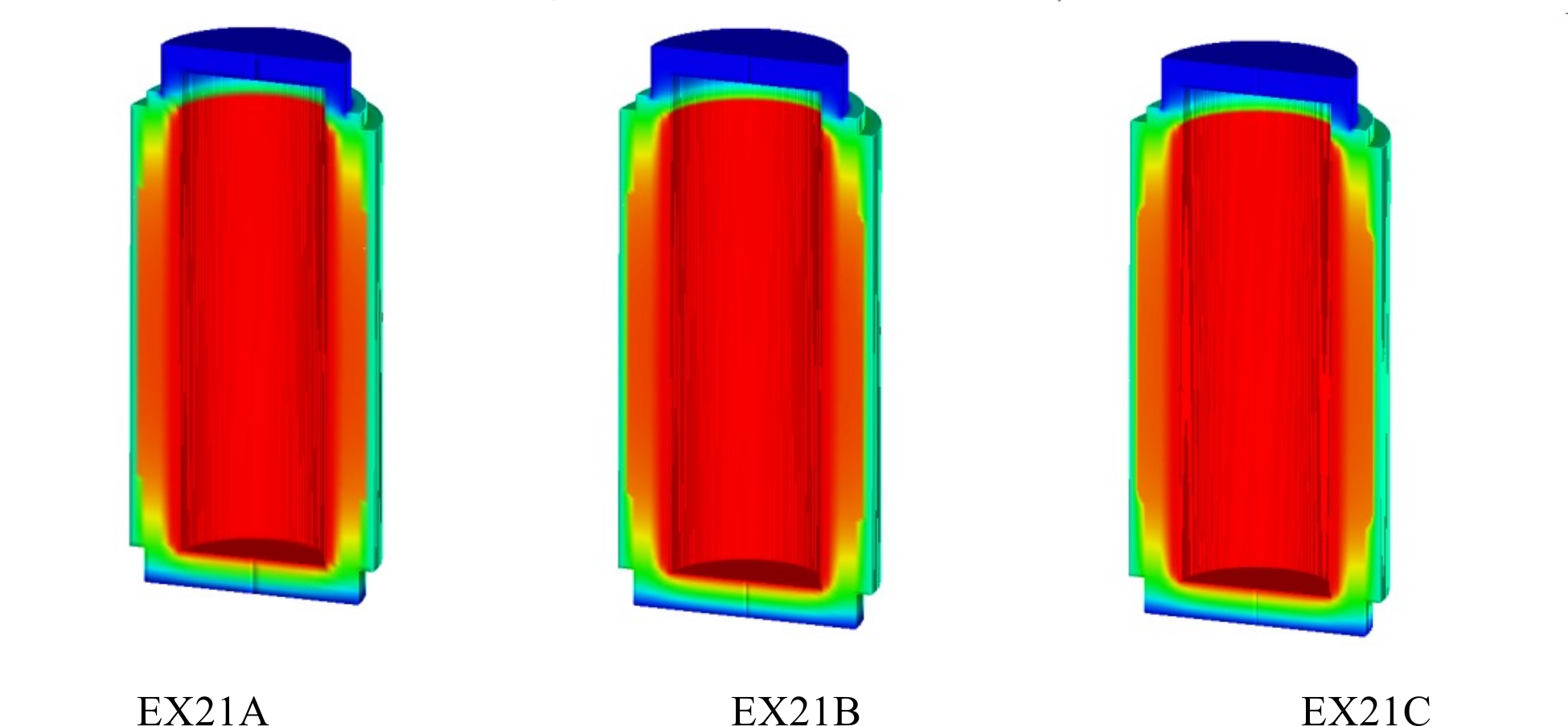
Figure 9.5.5 Temperature distribution
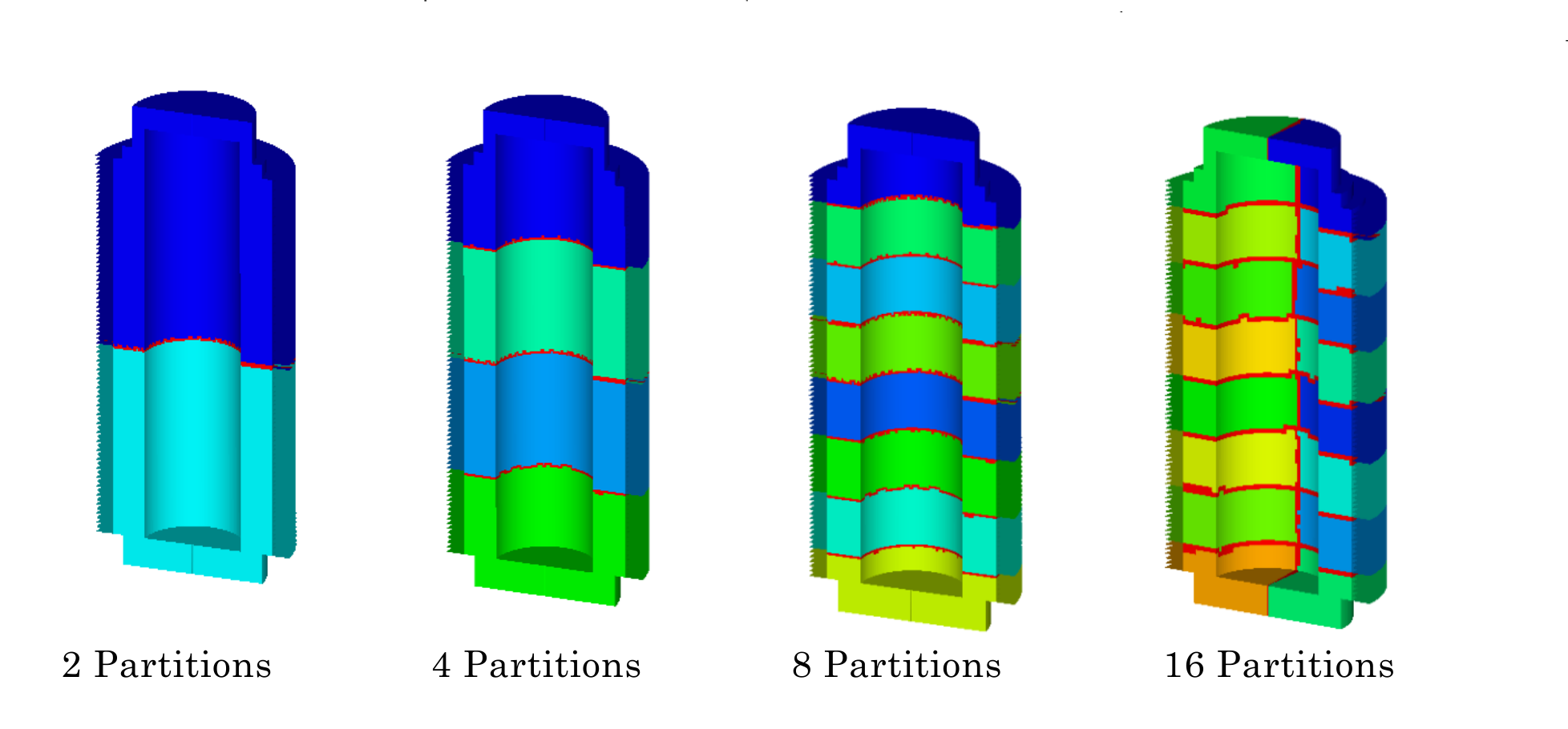
Figure 9.5.6 Distributed model
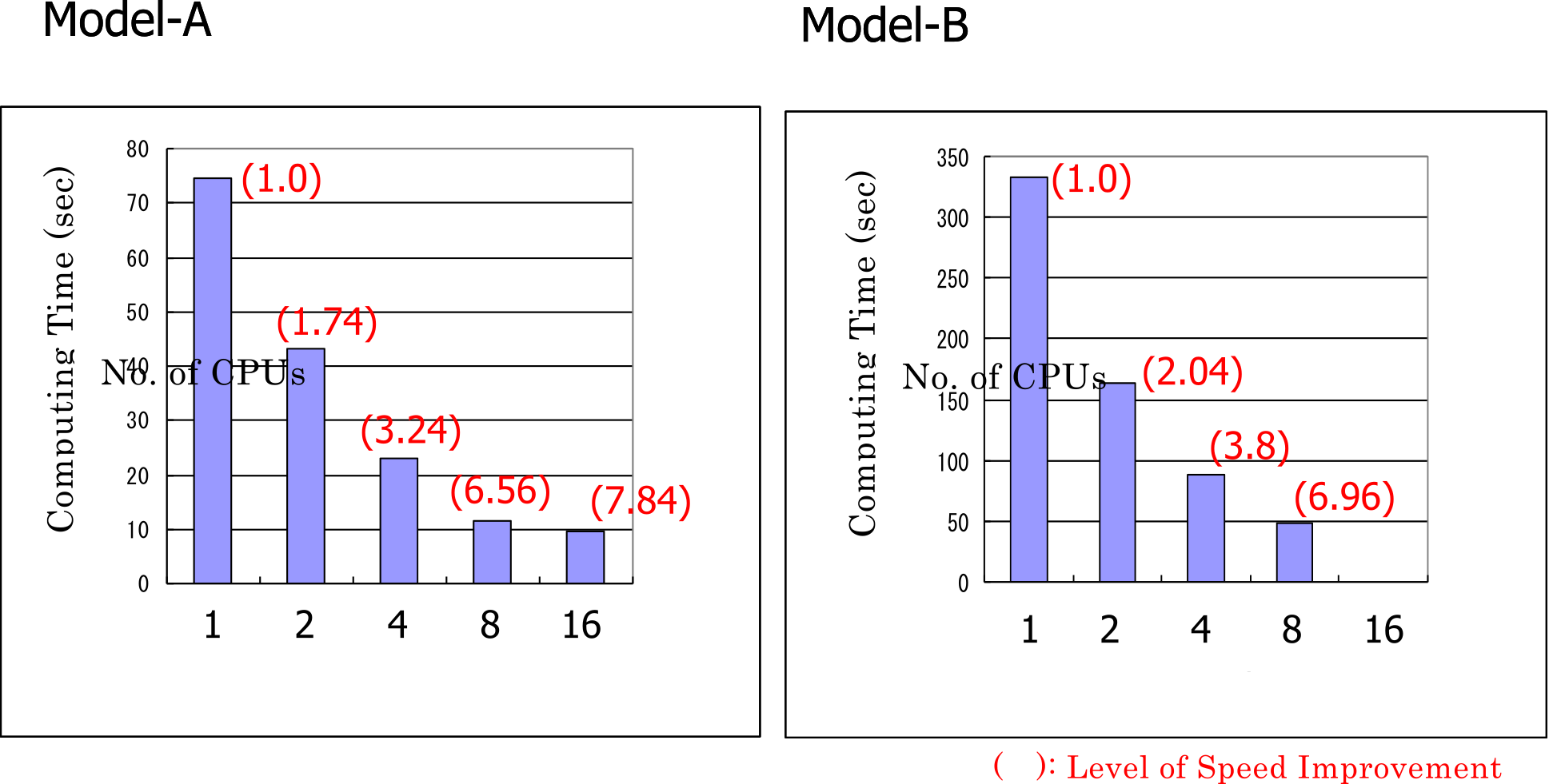
Figure 9.5.7 Speedup from distributed processing